A Seat at the Table — and a Shift in Who Belongs There
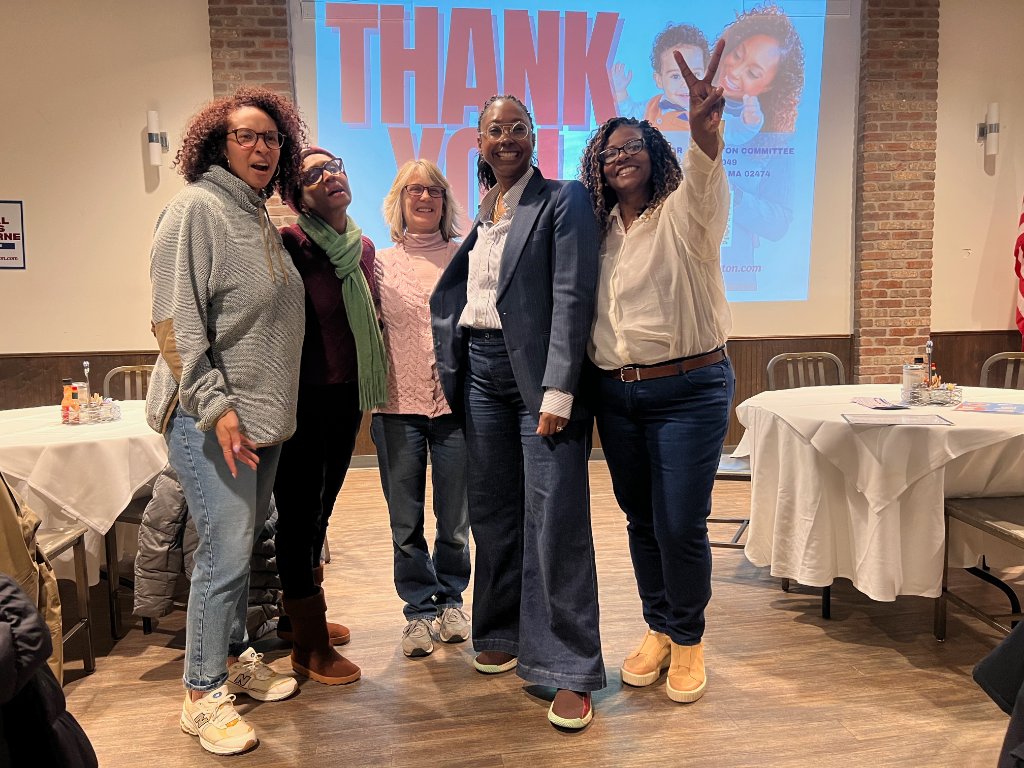
I didn't set out to make history.
I set out to serve.
But when I was elected to the Arlington School Committee, I became the first person of color to hold that role in our town. While that milestone matters, what matters more is what it represents for our students, for our families, and for the future of leadership in our schools.
This moment didn't happen in isolation. It is part of a much longer story, one I found myself reflecting on while preparing materials for my college classes. As I revisited the history of Black women in leadership, I was reminded that progress in this country has often come from those who were never initially invited into the room, but showed up anyway and reshaped it.
Shirley Chisholm's words stayed with me: "It may very well take a Black woman to save our country." Not because any one person is meant to carry that burden, but because perspective matters. Leadership changes when new voices are not only included, but heard.
Research from the Center for American Progress describes women of color as a "collective powerhouse" in the electorate, shaping outcomes, organizing communities, and driving civic engagement, often without holding proportional power in the spaces where decisions are made.
I have seen that dynamic up close.
It is not just a national issue. It exists in our towns, in our school systems, and in the everyday decisions that shape a child's experience, from curriculum to discipline policies, from mental health supports to who feels a sense of belonging in the classroom.
Melinda French Gates writes that too often, decisions are made for women instead of by them. That gap between lived experience and decision-making power has real consequences, and closing it starts locally.
That is part of why I ran.
My career has always been rooted in telling stories that matter, stories about access, opportunity, and inequity. As a journalist, I reported on education systems, breaking down complex challenges like chronic absenteeism, teacher diversity, and barriers embedded within our schools. I have spent years translating policy into real life, showing how decisions made in boardrooms and government offices show up in classrooms and living rooms.
But at some point, telling the story is not enough. You have to help shape what happens next.
I ran on three core ideas: equity and excellence go hand in hand, representation strengthens leadership, and strong schools require both vision and responsible stewardship. Those principles guide how I approach this role, not as a platform, but as a responsibility.
Being the first is not the end goal. It is a signal.
A signal to students who may be watching, especially those who have never seen themselves reflected in leadership, that they belong in these spaces too. That their voice matters. That their perspective is essential.
I often talk about education through what I call the ladder and mirror framework. Our schools should be ladders that create pathways to opportunity, while also serving as mirrors where students can see themselves reflected with dignity, possibility, and belonging. Leadership should do the same.
When students see themselves reflected in decision-makers, it changes how they understand their place in the world. It expands what feels possible.
I do not want to be the first and the only. I want to be part of building something that outlasts any one person, a system where representation is no longer remarkable because it is expected, where leadership reflects the full diversity of the community it serves as a standard.
Real change does not happen in a single election. It happens when doors stay open.
This is about more than a seat on a committee. It is about building a school system and a community where every student can see themselves, feel supported, and believe in their ability to lead.
That is the work. And we are just getting started.

